All Categories
Featured
Table of Contents
Over the last couple of months, we've discussed where billionaires live and how the uber-rich spend their cash. What about how they invest? A brand-new report from UBS has the answers. This year, the bank conducted its yearly study of billionaire clients on several topics, including where they prepare to invest their cash for 12-month and five-year periods.
Forty percent of respondents stated they see chance in Western Europe over the next 12 months, up from 18% in 2024. For China, 34% of participants see opportunity versus 11% in 2015. The Asia Pacific area, omitting China, likewise saw an eight percentage point jump in interest, with 33% of participants bullish.
While 80% of respondents liked the region in the 2024 survey, just 63% stated they did in 2025 The shifts in sentiment are because of a number of dangers that worry billionaires, the main amongst them being tariffs. Sixty-six percent of participants mentioned tariffs as one of the aspects "more than likely to negatively impact the marketplace environment over 12 months." That was followed by a prospective significant geopolitical conflict at 63%, policy uncertainty at 59%, and greater inflation at 44%."I do not see The United States and Canada as the top financial investment location, despite the fact that its markets stay deep and ingenious," among UBS's European customers said.
We choose to move focus towards real assets, which use more tangible value and defense in unpredictable or inflationary environments. Equities over bonds can make sense in the existing cycle, however our method emphasizes stability and durability rather than short-term market moves."Still, while shorter-term outlooks have changed considering that last year, views for the next five years have normally remained the very same for a lot of regions compared to 2024.
Key Financial Trends Across the Middle East
Personal, not public, equity was the most typical property where participants stated they mean to put their money over the next 12 months. Forty-nine percent stated they plan to have their money in direct personal equity investments. The next most common places to invest remained in hedge funds and public developed market equities, both at 43%.

At the exact same time, respondents likewise showed higher intents of pulling their money out of personal equity than publicly traded stocks.
Stacked bar chart revealing cumulative ETF flows (in billions of dollars) by country from 2015 to 2026. Each bar represents a year, with sections for Brazil, Mexico, South Korea, China, Germany, Japan, Taiwan, and India.
Will Foreign Investment Flows Surge in 2026?
Inflows increase again in 2021, led mostly by China, and stay favorable in 2022. Strong inflows continue in 2023 and 2024, with significant contributions from Japan and India. After a smaller favorable year in 2025, inflows increase once again to start 2026, led by South Korea and Japan. Overall, the chart shows cyclical ETF flows from 2015 to 2025, followed by a sharp spike in early 2026.
In the race for AI management, United States tech giants are expected to spend over $700 billion this year on data centers and other infrastructure,1 helping power the S&P 500 to tape highs in recent months. AI is not just a United States story. This enormous costs on AI infrastructure has assisted generate service development around the world.
(Some global stocks do not have shares or ADRs listed on United States exchanges. Based on companies' spending strategies, these capital circulations are expected to continue in the coming months, Fidelity supervisors say.
Upcoming Middle Eastern Economic ProjectionsFiscal Growth and Investment in the 2026 GCC
"Japanese business have actually been leaders in offering foundational base products and packaging-related technologies that are assisting sustain the innovation occurring in the semiconductor industry," says Masaki Nakamura, supervisor of the (). One business that has illustrated this style is (),4 a leader in products utilized in chip fabrication and packaging.
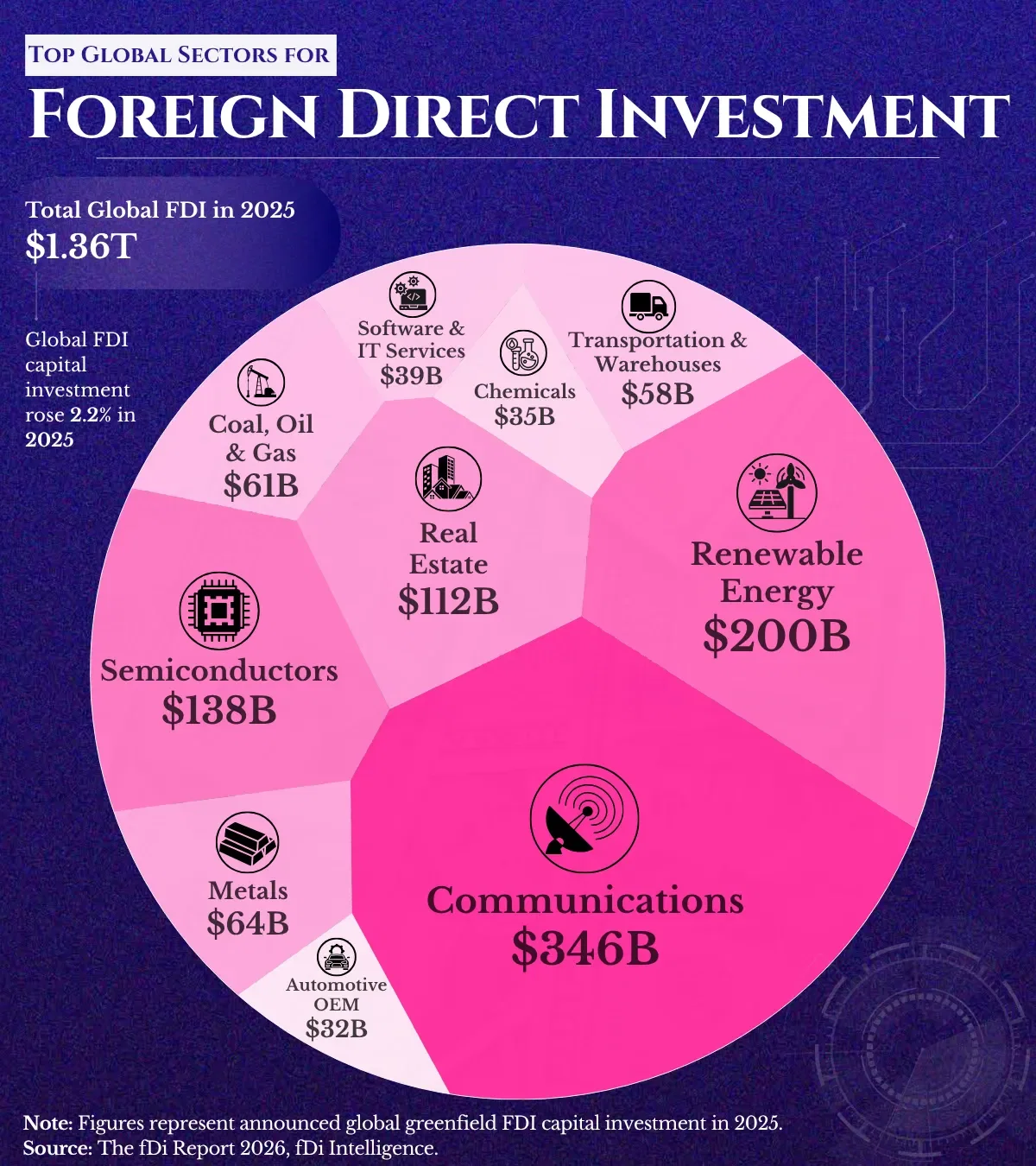
Another company that has benefited is (),6 a semiconductor provider whose products support a broad variety of electronic and industrial applications.

Latest Posts
Analyzing Regional Market Potential in 2026
Essential Financial Trends Across the GCC
Assessing GCC Investment Resilience for 2026